
Table of Contents
Introduction to Employee Benefits Consulting and Fractional Benefits Leadership
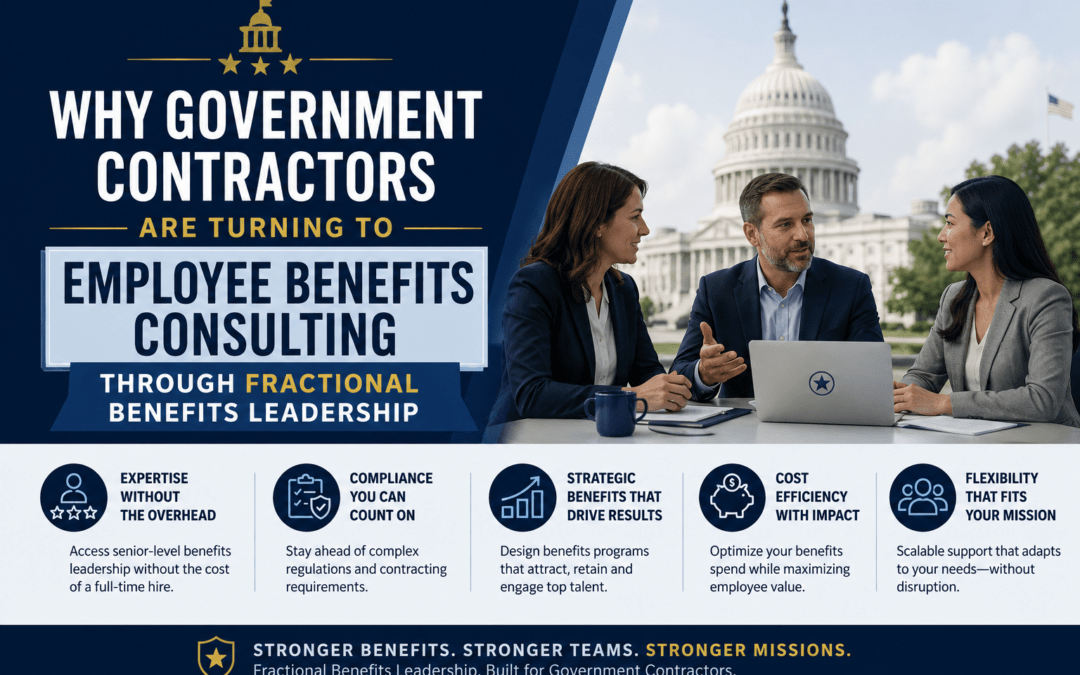
Government contractors operate in one of the most regulated and compliance-driven employment environments in the United States. As labor requirements, service contracts, and federal oversight continue to evolve, many organizations are discovering that traditional internal HR and benefits management models are no longer sufficient. Instead, a growing number of contractors are turning to employee benefits consulting supported by fractional benefits leadership to gain strategic oversight, reduce compliance risk, and improve workforce competitiveness.
This approach blends high-level executive benefits expertise with flexible, on-demand support. Rather than hiring a full-time benefits executive, contractors are engaging fractional leaders who specialize in employee benefits consulting, ensuring that organizations remain compliant, cost-effective, and competitive in attracting and retaining talent.
The Growing Demand for Employee Benefits Consulting Among Government Contractors
Government contractors are increasingly recognizing the strategic importance of employee benefits consulting. This demand is being driven by multiple factors including rising healthcare costs, stricter compliance regulations under frameworks such as the Service Contract Act (SCA), the Affordable Care Act (ACA), and ERISA requirements, as well as growing competition for skilled labor. Organizations that once treated benefits administration as a purely operational function are now realizing it is a core component of workforce strategy and contract performance.
Employee benefits consulting provides contractors with access to specialized expertise that goes beyond routine HR administration. Instead of simply managing enrollments or vendor paperwork, consultants evaluate plan design, benchmark benefits against industry standards, and ensure compliance with federal and state regulations. This shift has made employee benefits consulting a critical resource for companies managing multiple contracts, locations, and employee classifications.
In addition, government contractors are under pressure to demonstrate cost efficiency and audit readiness. Benefits errors can lead to contract penalties, lost bids, or reputational damage. By leveraging employee benefits consulting, organizations gain a proactive approach to managing benefits risk while improving transparency and reporting accuracy.
The competitive labor market has also contributed to this growing demand. Contractors must offer attractive and compliant benefits packages to recruit and retain skilled workers, particularly in industries such as defense, IT services, engineering, and logistics. As a result, employee benefits consulting has shifted from a luxury service to an operational necessity for many organizations.
How Fractional Benefits Leadership Is Transforming Employee Benefits Consulting
Fractional benefits leadership is redefining how organizations access employee benefits consulting. Instead of relying on full-time executives or overstretched HR teams, government contractors are engaging fractional leaders who provide executive-level oversight on a part-time or project basis. This model allows organizations to tap into deep expertise without the financial burden of a permanent senior hire.
These fractional leaders function as embedded advisors, guiding benefits strategy, vendor negotiations, compliance alignment, and plan optimization. They bring years of experience in employee benefits consulting and apply that knowledge directly to the contractor’s workforce structure. This includes analyzing benefit utilization trends, identifying cost inefficiencies, and ensuring alignment with federal contracting requirements.
One of the most significant transformations is the shift from reactive to proactive benefits management. Traditional HR teams often respond to issues after they arise, such as compliance gaps or rising healthcare costs. Fractional benefits leaders, however, anticipate challenges and implement preventative strategies. This elevates the role of employee benefits consulting from administrative support to strategic leadership.
Additionally, fractional leadership enables scalability. As government contractors grow or win new bids, their benefits complexity increases. Fractional experts can scale involvement up or down depending on contract load, workforce expansion, or regulatory changes. This flexibility ensures continuous access to employee benefits consulting expertise without unnecessary overhead.
Ultimately, this model is transforming how organizations perceive and utilize employee benefits consulting, shifting it into a dynamic, embedded component of business strategy.
Reducing Compliance Risks Through Employee Benefits Consulting and Strategic Benefits Oversight
Compliance is one of the most critical challenges faced by government contractors. Regulations such as the Service Contract Act (SCA), ERISA, ACA reporting requirements, and Department of Labor audits require precise and consistent benefits administration. Even minor errors can result in financial penalties or contract disruptions, making employee benefits consulting an essential safeguard.
Employee benefits consulting provides structured oversight to ensure that benefits programs remain compliant at all times. Consultants review eligibility classifications, contribution structures, plan documentation, and reporting processes to ensure alignment with federal requirements. This reduces the risk of audit findings and strengthens the organization’s ability to withstand regulatory scrutiny.
Fractional benefits leadership enhances this process by embedding compliance expertise directly into the organization’s decision-making structure. Instead of relying on external reviews after issues occur, contractors gain ongoing monitoring and advisory support. This continuous oversight model is particularly valuable in multi-state or multi-contract environments where compliance complexity increases significantly.
In addition, employee benefits consulting supports documentation and audit readiness. Contractors must maintain accurate records of benefit offerings, employee classifications, and fringe benefit calculations. Consultants help standardize these processes, ensuring that data is accessible and defensible during audits or contract reviews.
By integrating employee benefits consulting with fractional leadership, government contractors can significantly reduce exposure to compliance risks while improving operational confidence and regulatory preparedness.
Why Employee Benefits Consulting Helps Government Contractors Control Costs and Improve Efficiency
Rising healthcare and benefits costs continue to place pressure on government contractors, many of whom operate under fixed-price or tightly budgeted contracts. In this environment, employee benefits consulting plays a critical role in controlling expenses while maintaining competitive benefit offerings.
Consultants analyze plan structures, vendor contracts, and utilization patterns to identify inefficiencies and opportunities for savings. This includes evaluating insurance carriers, negotiating renewal rates, and optimizing employer contributions. Through strategic oversight, employee benefits consulting helps organizations reduce waste and improve financial predictability.
Fractional benefits leadership further enhances cost control by ensuring that decisions are guided by executive-level insight rather than reactive budgeting. Instead of responding to cost increases after they occur, contractors can implement long-term strategies that stabilize expenses. This includes wellness initiatives, plan redesign, and improved employee education to reduce unnecessary claims.
Efficiency gains are also realized through process improvement. Many government contractors rely on outdated or fragmented benefits administration systems. Employee benefits consulting introduces streamlined workflows, automated reporting tools, and centralized data management practices. This reduces administrative burden and frees HR teams to focus on strategic initiatives.
Ultimately, employee benefits consulting enables contractors to align workforce investment with financial performance, ensuring that benefits programs remain sustainable and competitive in a demanding federal contracting environment.
Building a Competitive Workforce with Employee Benefits Consulting and Fractional Benefits Leadership
In today’s competitive labor market, government contractors must go beyond salary offers to attract and retain top talent. Employee benefits consulting plays a key role in designing benefits packages that meet employee expectations while aligning with organizational goals.
Consultants help contractors benchmark their benefits against industry standards, ensuring that offerings remain competitive in sectors such as defense, IT, engineering, and logistics. This includes health insurance, retirement plans, paid leave policies, and supplemental benefits that influence employee satisfaction and retention.
Fractional benefits leadership adds a strategic layer to this process by aligning benefits programs with long-term workforce planning. Rather than treating benefits as a static offering, organizations can evolve their packages based on contract needs, employee demographics, and market trends.
Employee benefits consulting also enhances recruitment outcomes. A well-structured benefits strategy can significantly improve job acceptance rates and reduce turnover, particularly in high-skill roles. For government contractors competing for cleared personnel or specialized technical talent, this advantage is especially critical.
By combining employee benefits consulting with fractional leadership, contractors can build a workforce strategy that supports both compliance and competitive positioning in the federal marketplace.
Conclusion
Government contractors are increasingly recognizing that employee benefits are no longer just an administrative responsibility—they are a strategic asset. By leveraging employee benefits consulting supported by fractional benefits leadership, organizations can improve compliance, reduce costs, and strengthen workforce competitiveness. This integrated approach allows contractors to remain agile in a complex regulatory environment while positioning themselves for long-term success in federal contracting.
To learn more about Employee Benefits Consulting, contact Cornerstone SCA at 405-706-3818 for a free no obligation assessment.