Employee Open Enrollment Management for Government Contractors: 8 Proven Ways and How to Increase Employee Benefits Enrollment Without Compliance Risk

Employee Open Enrollment Management for Government Contractors: 8 Proven Ways and How to Increase Employee Benefits Enrollment Without Compliance Risk

Table of Contents

Introduction

For government contractors and subcontractors, employee open enrollment is not just an annual HR event—it is a compliance-sensitive operational window that directly impacts workforce stability, contract performance, and regulatory alignment. Unlike traditional private-sector environments, contractors working under federal or state-funded agreements must ensure that benefits administration aligns with strict wage determinations, Service Contract Act (SCA) requirements, and audit-ready documentation standards.

Yet despite its importance, many organizations still struggle with participation. Employees delay decisions, ignore communications, or default out of benefits entirely. This creates downstream issues such as coverage gaps, compliance exposure, and increased administrative burden.

The real challenge is not just running employee open enrollment—it is understanding how to increase employee benefits enrollment in a way that is consistent, scalable, and compliant.

This article explores eight proven strategies tailored specifically for government contractors. Each section breaks down practical approaches that HR leaders, compliance teams, and benefits administrators can implement to improve engagement, strengthen communication, and ultimately increase participation without increasing compliance risk.


Understanding Employee Open Enrollment in Government Contracting and How to Increase Employee Benefits Enrollment With Confidence

In government contracting environments, employee open enrollment operates under a unique set of constraints that do not typically apply to commercial employers. Contractors must balance employee needs with federal regulations, wage determinations, fringe benefit obligations, and contract-specific labor clauses. This creates a layered complexity that makes benefits enrollment both critical and high-risk.

At its core, employee open enrollment is the designated period when employees can enroll in or make changes to their health insurance, retirement plans, and voluntary benefits. However, for government contractors, this process is deeply connected to compliance obligations. For example, under SCA-covered contracts, employers must ensure that fringe benefits meet minimum requirements, which may include health insurance contributions, paid leave, or cash equivalents.

This is where many organizations struggle with how to increase employee benefits enrollment effectively. Employees often do not understand the value of their benefits package, especially when working in high-turnover or dispersed labor environments such as security services, maintenance contracts, or logistics operations.

To increase participation, contractors must first build clarity. Employees need to understand not just what benefits are offered, but why they matter in the context of their compensation package. When communication is unclear or overly technical, employees disengage, leading to low enrollment rates.

Another key factor is timing and structure. Many government contractors operate across multiple sites or states, making it difficult to coordinate consistent messaging during employee open enrollment. Without centralized planning, employees receive fragmented information, which reduces trust and engagement.

Improving participation starts with simplifying the experience. When employees are given clear instructions, easy-to-access enrollment platforms, and consistent messaging, they are significantly more likely to engage. This is one of the most effective ways to improve employee open enrollment outcomes and directly supports how to increase employee benefits enrollment without increasing administrative burden.

Ultimately, confidence in the process comes from structure, clarity, and compliance alignment. Contractors who treat employee open enrollment as a strategic workforce event—not just an HR deadline—see stronger participation and fewer compliance risks.


Why Employees Ignore Employee Open Enrollment Communications and How to Increase Employee Benefits Enrollment Through Better Messaging

One of the biggest barriers to successful employee open enrollment is not the benefits themselves—it is communication failure. Employees often ignore emails, skip meetings, or fail to complete enrollment because the messaging does not resonate with their daily experience or priorities.

Government contractors face an additional challenge: workforce diversity. Employees may include administrative staff, field technicians, security personnel, and contract specialists, all of whom receive and process information differently. When messaging is generic, it fails to connect.

To understand how to increase employee benefits enrollment, organizations must first address why employees disengage. Common reasons include information overload, unclear value propositions, lack of urgency, and inconsistent communication channels.

Many HR teams rely heavily on email as the primary communication tool during employee open enrollment. However, in contractor environments, employees may not regularly check email, especially in operational roles. This leads to missed deadlines and reduced participation.

Improving engagement requires a multi-channel communication strategy. Messaging should be repeated across email, text alerts, digital dashboards, and supervisor-led discussions. The goal is not just distribution but reinforcement.

Equally important is message clarity. Employees need simple, direct explanations of what is changing, what action they must take, and what they gain by participating. When communication is filled with jargon or compliance language, it reduces engagement and creates confusion.

Another critical factor in how to increase employee benefits enrollment is personalization. Employees are more likely to engage when messaging reflects their specific situation, such as family coverage options, cost changes, or new plan offerings. Personalized messaging increases relevance, which directly improves participation rates.

Storytelling can also be a powerful tool. Instead of presenting benefits as abstract offerings, HR teams can highlight real-world scenarios such as how medical coverage supports families or how voluntary benefits provide financial protection during emergencies.

When communication is done correctly, employee open enrollment becomes less of a compliance obligation and more of a valued employee experience. This shift is essential for government contractors seeking higher participation rates without increasing administrative pressure.


Digital Solutions That Transform Employee Open Enrollment Participation and How to Increase Employee Benefits Enrollment Efficiently

Technology plays a central role in modern employee open enrollment strategies, especially for government contractors managing distributed workforces across multiple job sites and regions. Digital transformation is no longer optional—it is a necessity for scalability, compliance tracking, and improved engagement.

One of the most effective ways to understand how to increase employee benefits enrollment is by implementing user-friendly enrollment platforms that simplify decision-making. These systems allow employees to compare plans, estimate costs, and complete enrollment from any device, reducing friction and increasing completion rates.

Self-service portals are particularly valuable in contractor environments where employees may work non-traditional hours or in field-based roles. When employees can complete enrollment on their own schedule, participation naturally increases.

Automation also plays a critical role. Automated reminders, deadline alerts, and enrollment confirmations ensure that employees remain engaged throughout the employee open enrollment window. This reduces reliance on manual follow-ups from HR teams, which can be inconsistent or delayed.

Another powerful digital tool is decision-support software. These tools guide employees through benefits selection based on their personal needs, such as family size, expected healthcare usage, or budget preferences. This directly supports how to increase employee benefits enrollment by reducing confusion and decision fatigue.

Data analytics further enhances the process. HR teams can track participation trends, identify departments with low engagement, and adjust communication strategies in real time. This allows for continuous improvement rather than reactive problem-solving after enrollment closes.

For government contractors, compliance tracking is equally important. Digital systems provide audit-ready records of employee elections, waiver forms, and acknowledgment receipts. This reduces compliance risk while improving operational efficiency.

Ultimately, technology transforms employee open enrollment from a manual administrative burden into a streamlined, data-driven process that supports higher engagement and better outcomes.


Training Managers to Support Employee Open Enrollment Success and How to Increase Employee Benefits Enrollment from the Front Line

Managers play a critical yet often underutilized role in employee open enrollment success. In government contracting environments, where employees may be dispersed across job sites, managers are often the most trusted source of information.

When employees are unsure about benefits, they frequently turn to their direct supervisor rather than HR. This makes manager training a key factor in how to increase employee benefits enrollment effectively.

Unfortunately, many organizations fail to equip managers with the tools and knowledge they need. As a result, misinformation spreads, or employees receive incomplete guidance, leading to lower participation rates.

Effective manager training should focus on three areas: understanding benefits basics, communicating key enrollment messages, and reinforcing deadlines. Managers do not need to be benefits experts, but they do need to confidently explain where employees can find information and why enrollment matters.

Another important strategy is providing managers with standardized talking points and communication templates. This ensures consistency across departments and reduces the risk of conflicting messages during employee open enrollment.

Front-line leadership engagement also increases accountability. When managers are measured on team participation rates, they are more likely to actively encourage enrollment and follow up with employees who have not completed the process.

In addition, managers can play a motivational role. Simple conversations about benefits during team meetings or one-on-one check-ins can significantly improve engagement. Employees are more likely to act when they feel personally encouraged rather than passively informed.

By empowering managers, government contractors create a decentralized communication model that strengthens overall participation and directly improves how to increase employee benefits enrollment without increasing HR workload.


Long-Term Strategies to Optimize Employee Open Enrollment Cycles and How to Increase Employee Benefits Enrollment Sustainably

Sustainable success in employee open enrollment requires more than annual campaign adjustments. Government contractors must build long-term systems that continuously improve participation, compliance readiness, and employee understanding.

One of the most effective long-term strategies is year-round benefits education. Instead of waiting for enrollment season, organizations should consistently communicate the value of benefits throughout the year. This builds familiarity and reduces decision-making pressure during open enrollment.

Another key strategy is post-enrollment analysis. Reviewing participation data, identifying drop-off points, and evaluating communication effectiveness helps refine future strategies for how to increase employee benefits enrollment.

Contractors should also implement feedback loops. Employee surveys after enrollment can reveal confusion points, communication gaps, and platform issues. This feedback is essential for continuous improvement.

Standardizing the employee open enrollment process across all contract locations is another critical step. Consistency reduces confusion, ensures compliance alignment, and improves scalability.

Additionally, integrating benefits education into onboarding ensures that new employees are prepared before they reach their first enrollment cycle. This proactive approach significantly improves participation rates over time.

Finally, aligning benefits strategy with workforce planning ensures that employee open enrollment is not treated as a standalone HR task but as part of a broader talent and retention strategy.


Call to Action

If you would like to learn more about Employee Open Enrollment and how they can help you with higher engagement, contact Cornerstone SCA at 405-513-0767 today for a free no obligation consultation.


Conclusion

Improving participation in employee open enrollment is not about a single tactic—it is about building a system that combines communication, technology, leadership engagement, and long-term planning. For government contractors, the stakes are even higher due to compliance requirements and workforce complexity.

By focusing on clear messaging, digital transformation, manager involvement, and continuous improvement, organizations can significantly strengthen participation rates while reducing compliance risk. More importantly, they can create a benefits experience that employees understand, value, and actively engage with year after year.

When executed correctly, understanding how to increase employee benefits enrollment becomes less of a challenge and more of a competitive advantage in securing and retaining government contracts.
The Hidden Costs of Ignoring Union Benefit Requirements—and How Government Contractors Can Avoid Them

The Hidden Costs of Ignoring Union Benefit Requirements—and How Government Contractors Can Avoid Them

Table of Contents

Introduction to Union Benefit Requirements

In the world of federal contracting, compliance is not optional—it is the foundation that determines whether a business wins, retains, or loses government work. Among the most overlooked yet financially impactful areas of compliance are union benefit requirements and the proper administration of union employee benefits. While many government contractors focus heavily on pricing, staffing, and bid strategy, they often underestimate the complexity and long-term financial consequences tied to benefit obligations under union agreements, prevailing wage laws, and federal labor standards.

At first glance, union benefit requirements may appear to be a straightforward payroll obligation: pay employees the correct wage, contribute to benefit funds, and move on. However, the reality is far more complex. These requirements are deeply tied to federal regulations such as the Service Contract Act (SCA), Davis-Bacon Act provisions, collective bargaining agreements, and multiemployer benefit plans. Misinterpreting even a single clause in these frameworks can result in costly audits, contract penalties, and reputational damage that can affect future bidding opportunities.

For government contractors and subcontractors, union employee benefits are not just an HR function—they are a strategic compliance risk area that touches payroll, accounting, project management, and contract administration. Failure to properly manage these obligations can lead to underfunded benefit contributions, employee disputes, Department of Labor investigations, and even contract termination in severe cases.

This article explores the hidden costs associated with ignoring or mismanaging union benefit requirements, while also providing practical, actionable strategies that government contractors can use to avoid compliance pitfalls. From understanding regulatory obligations to strengthening internal systems and leveraging compliance as a competitive advantage, this guide is designed to help contractors build stronger, more resilient operations.

Whether you are a seasoned federal contractor or new to government subcontracting, mastering union employee benefits compliance is essential not only for avoiding penalties—but for positioning your business for long-term growth and contract success.


Why Union Benefit Requirements Are More Than Just a Compliance Obligation

At the surface level, many contractors perceive union benefit requirements as simply another checkbox in a long list of federal compliance obligations. However, this mindset often leads to costly oversights. In reality, these requirements are a critical component of labor cost structure, workforce stability, and competitive positioning in the federal contracting space.

To fully understand their importance, contractors must recognize that union employee benefits are directly tied to labor agreements that define how employees are compensated beyond hourly wages. These benefits often include health insurance contributions, pension fund payments, vacation accruals, training funds, and other fringe benefit obligations mandated by collective bargaining agreements or federal wage determinations.

One of the most significant misconceptions among government contractors is that wages alone represent the full cost of labor. In truth, union benefit requirements can increase total labor costs by 30% to 60% depending on the contract type and geographic region. This means that any miscalculation in benefit obligations can severely distort project budgeting and profitability forecasting.

Additionally, union employee benefits are often governed by multi-layered regulations that overlap between federal, state, and union-specific rules. For example, a contractor working under the Service Contract Act must comply with both wage determinations issued by the Department of Labor and the specific fringe benefit requirements outlined in union agreements. These overlapping obligations make compliance significantly more complex than standard payroll processing.

Beyond financial implications, union benefit requirements also play a critical role in workforce retention and employee satisfaction. Workers covered under union agreements expect timely and accurate contributions to their benefit plans. Any inconsistency in payments or reporting can quickly lead to grievances, work stoppages, or labor disputes that disrupt project timelines.

From a business perspective, contractors who treat union employee benefits as a strategic function rather than an administrative burden are far more likely to succeed in competitive federal markets. Properly managed benefits ensure not only compliance but also workforce stability, which directly impacts project performance and client satisfaction.

Moreover, contracting agencies increasingly evaluate vendors based on their compliance history. A strong track record of adhering to union benefit requirements can improve bid competitiveness, while a history of violations can disqualify contractors from future opportunities. In this sense, compliance is not just about avoiding penalties—it is about maintaining eligibility in the federal contracting ecosystem.

Ultimately, union benefit requirements represent far more than a regulatory obligation. They are a foundational element of labor cost management, risk mitigation, and long-term business sustainability in government contracting.


The Hidden Risks of Mismanaging Union Employee Benefits on Government Contracts

When government contractors underestimate or mismanage union employee benefits, the consequences rarely stay hidden for long. What often begins as a minor payroll oversight or misinterpreted compliance requirement can quickly escalate into financial penalties, contract disputes, and long-term damage to a company’s credibility in the federal marketplace. The true danger of union benefit requirements is not just non-compliance—it is the ripple effect that spreads across operations, finances, workforce stability, and future contracting opportunities.

One of the most immediate risks is financial exposure. Contractors who fail to properly calculate or remit required contributions to union benefit funds can accumulate significant liabilities over time. These underpayments are rarely unnoticed. Union auditors and federal compliance officers routinely review payroll records, fringe benefit allocations, and certified payroll reports to ensure accuracy. Once discrepancies are identified, contractors may be required to pay back wages, make retroactive contributions, and cover penalties or interest fees. In some cases, these amounts can exceed original contract profit margins, turning a profitable project into a financial loss.

Another major risk tied to union employee benefits involves Department of Labor audits and investigations. Federal agencies such as the Wage and Hour Division actively enforce compliance with prevailing wage laws and Service Contract Act provisions. If a contractor is found to be non-compliant with union benefit requirements, it can trigger a formal investigation. These audits are not only time-consuming but also resource-intensive, requiring detailed documentation, payroll records, and proof of benefit contributions across multiple projects and time periods.

Beyond financial and regulatory consequences, mismanaging union employee benefits can also lead to labor disputes and workforce disruption. Unionized workers rely on consistent and accurate benefit contributions for healthcare coverage, retirement planning, and other critical support systems. When employees discover inconsistencies or delays, grievances may be filed through union representatives. In more severe cases, this can escalate to work stoppages, slowdowns, or strained labor relations that directly impact project timelines and deliverables.

For government contractors, timing is everything. Even a short disruption in workforce availability can jeopardize contract milestones, delay deliverables, and damage relationships with federal agencies. This is particularly critical in industries such as construction, defense contracting, facilities maintenance, and IT services, where strict timelines and performance standards are non-negotiable.

Another hidden risk associated with union benefit requirements is reputational damage. In the federal contracting space, reputation is currency. Agencies and prime contractors often evaluate subcontractors based on past performance, compliance history, and reliability. A contractor with documented issues related to union employee benefits may find themselves excluded from future bidding opportunities or downgraded in vendor evaluations. Once trust is lost, rebuilding it can take years.

There is also the risk of inaccurate job costing and project budgeting. When union benefit requirements are not properly integrated into cost estimates, contractors may underbid projects without realizing the full labor burden. This leads to reduced profit margins or financial losses once benefit obligations are fully accounted for during execution. Over time, this creates a cycle where contractors struggle to maintain profitability on union-covered projects.

Perhaps one of the most overlooked risks is internal operational inefficiency. Mismanagement of union employee benefits often signals deeper issues in payroll systems, HR processes, and compliance oversight. Without integrated systems, contractors may rely on manual calculations, spreadsheets, or inconsistent reporting methods. These inefficiencies increase the likelihood of errors and make it difficult to maintain audit-ready records.

In essence, failing to properly manage union benefit requirements exposes government contractors to a multi-layered risk environment that affects every aspect of their business. From financial penalties and legal exposure to workforce disruption and reputational harm, the stakes are significantly higher than many contractors initially realize..


Strengthening Payroll, Reporting, and Union Benefit Requirements Processes

For government contractors, maintaining compliance with union benefit requirements is not simply about understanding the rules—it is about building systems that consistently execute those rules without error. The backbone of this compliance structure lies in payroll accuracy, reporting integrity, and well-documented processes that ensure union employee benefits are calculated, allocated, and reported correctly across every project and labor category.

At the core of compliance is payroll administration, which serves as the primary mechanism for implementing union benefit requirements. Every hour worked under a union-covered contract must be properly classified, tracked, and compensated according to the applicable wage determination or collective bargaining agreement. This includes not only base wages but also fringe benefit contributions such as health insurance, pension funds, training contributions, and other mandated allocations. Even small misclassifications in job roles or labor categories can lead to significant compliance violations over time.

One of the most common weaknesses in contractor payroll systems is the reliance on fragmented or outdated processes. Many organizations still use manual spreadsheets or disconnected systems that do not integrate labor tracking with benefit calculations. This creates gaps in accuracy and increases the likelihood of errors in union employee benefits reporting. A single miscalculated fringe benefit rate can cascade across multiple employees and billing cycles, compounding financial exposure and audit risk.

To strengthen payroll systems, contractors must ensure that all union benefit requirements are embedded directly into their payroll software or enterprise resource planning (ERP) systems. Automated wage determinations, built-in fringe benefit calculations, and real-time compliance validation can significantly reduce administrative burden while improving accuracy. When systems are properly configured, payroll becomes not just a payment tool, but a compliance safeguard.

Equally important is timekeeping accuracy. Because union employee benefits are often tied to hours worked on specific job sites or contract types, precise time tracking is essential. Contractors must implement robust timekeeping systems that capture labor data in real time, distinguish between contract types, and properly allocate hours to the correct wage determinations. Without this level of detail, contractors risk misallocating benefit contributions and violating union benefit requirements without even realizing it.

Reporting is another critical pillar of compliance. Government contractors are typically required to submit certified payroll reports, fringe benefit documentation, and compliance certifications on a regular basis. These reports must accurately reflect both wages and union employee benefits, ensuring transparency for contracting officers and regulatory agencies. Errors in reporting can trigger audits, payment delays, or contract performance issues.

To improve reporting accuracy, contractors should establish standardized reporting templates and automated data extraction processes. This reduces manual input errors and ensures that all union benefit requirements are consistently represented across documentation. Additionally, implementing internal audit checks before submission can help identify discrepancies early and prevent costly corrections later.

Another essential component of strengthening compliance processes is segregation of duties within payroll and HR functions. No single individual should be responsible for both processing payroll and approving compliance reports. By separating responsibilities, contractors reduce the risk of errors, fraud, or oversight in union employee benefits administration.

Training also plays a vital role. Employees responsible for payroll and compliance must be fully educated on union benefit requirements, including how fringe benefits are calculated, how wage determinations apply, and how reporting obligations are structured. Without proper training, even the most advanced systems can fail due to human error or misunderstanding of regulations.

Finally, contractors should implement routine internal audits of payroll and benefits systems. These audits should review wage classifications, fringe benefit allocations, and reporting accuracy across active and completed contracts. Regular audits ensure that union employee benefits are consistently managed in compliance with federal and union standards, while also identifying process improvements before external audits occur.

When payroll, reporting, and internal controls are properly aligned, union benefit requirements become far more manageable. Instead of reacting to compliance issues after they arise, contractors can proactively ensure accuracy, reduce risk, and maintain confidence in their financial and operational systems.


Best Practices for Aligning Union Employee Benefits with Federal Labor Requirements

Aligning union employee benefits with federal labor requirements is where many government contractors either strengthen their compliance posture—or expose themselves to unnecessary risk. At this stage, it is no longer enough to simply understand union benefit requirements; contractors must actively design systems, workflows, and oversight mechanisms that ensure every benefit obligation is consistently met across all contracts, labor categories, and reporting cycles.

One of the most effective best practices is establishing a centralized compliance framework. Instead of managing union employee benefits separately across departments such as HR, payroll, and project management, contractors should consolidate oversight into a unified system. This ensures that union benefit requirements are applied consistently across all projects, regardless of location or contract type. Centralization reduces miscommunication, eliminates duplication of effort, and creates a single source of truth for compliance data.

Another critical best practice is mapping benefit obligations at the contract level. Every government contract may carry different wage determinations, collective bargaining agreements, or fringe benefit structures. Contractors who fail to map these obligations precisely often struggle with inconsistent application of union benefit requirements. By breaking down each contract into its specific labor categories and associated benefit obligations, organizations can ensure that union employee benefits are correctly assigned and tracked from the start of the project lifecycle.

Integration of compliance technology tools is also essential. Modern payroll and HR systems can automate much of the complexity associated with union benefit requirements, including wage determinations, fringe benefit calculations, and reporting outputs. These tools help reduce manual errors and provide real-time visibility into compliance status. When properly implemented, technology transforms union employee benefits management from a reactive process into a proactive system of control.

In addition to technology, contractors must prioritize documentation discipline. Federal agencies and union auditors require detailed records that support every aspect of union employee benefits, including hours worked, wage classifications, benefit contributions, and payment confirmations. Incomplete or inconsistent documentation is one of the most common triggers for compliance investigations. Maintaining organized, audit-ready records ensures that union benefit requirements can be verified quickly and accurately at any time.

Another best practice involves ongoing employee and manager training. Compliance is not solely the responsibility of the accounting or HR department—it extends across supervisors, project managers, and administrative staff. Everyone involved in labor tracking and reporting must understand how union employee benefits function within federal contracts. Regular training sessions help reinforce expectations and reduce the likelihood of costly mistakes.

Contractors should also implement pre-audit internal reviews before submitting certified payroll reports or responding to agency inquiries. These internal reviews act as a quality control checkpoint, ensuring that all union benefit requirements are properly applied and documented. By identifying discrepancies early, contractors can correct issues before they escalate into formal audits or financial penalties.

Another important strategy is benchmarking compliance performance across projects. By analyzing how different teams or divisions manage union employee benefits, contractors can identify inconsistencies, inefficiencies, and best practices. This data-driven approach allows organizations to continuously improve their compliance systems and strengthen adherence to union benefit requirements over time.

Finally, successful contractors understand that alignment with federal labor requirements is not a one-time effort—it is an ongoing operational discipline. Regulations change, wage determinations are updated, and union agreements evolve. Staying current requires continuous monitoring of regulatory updates and proactive adjustments to internal systems managing union employee benefits.

When these best practices are consistently applied, contractors significantly reduce compliance risk while improving operational efficiency. More importantly, they build a strong foundation of trust with federal agencies, unions, and employees alike—positioning themselves for long-term success in competitive government contracting environments.


Turning Union Benefit Requirements into a Competitive Advantage for Government Contractors

For many government contractors, union benefit requirements are viewed purely through the lens of compliance—something to manage carefully in order to avoid penalties, audits, or labor disputes. However, the most successful contractors take a very different approach. Instead of treating union employee benefits as a burden, they leverage them as a strategic advantage that strengthens their competitiveness, improves workforce stability, and enhances their reputation in the federal marketplace.

One of the most powerful advantages of mastering union benefit requirements is improved bid competitiveness and pricing accuracy. Contractors who fully understand their fringe benefit obligations can build far more accurate cost models when submitting proposals for federal contracts. Instead of guessing or underestimating labor costs, they can confidently incorporate union employee benefits into their pricing structures. This eliminates the risk of underbidding projects and ensures that profit margins remain stable throughout contract performance.

In addition, contractors who demonstrate strong compliance with union benefit requirements are often viewed more favorably by contracting officers and prime contractors. In the federal procurement space, past performance and compliance history matter significantly. A contractor with a proven track record of accurately managing union employee benefits signals reliability, professionalism, and reduced risk. This can lead to more subcontracting opportunities, higher contract awards, and stronger long-term partnerships.

Another key advantage lies in workforce stability and retention. Employees covered under union agreements expect timely, accurate, and transparent handling of their benefits. Contractors who consistently meet union employee benefits obligations create a more stable and satisfied workforce. This reduces turnover, minimizes training costs, and ensures higher productivity on job sites. In industries where skilled labor is in high demand, this stability becomes a critical competitive edge.

Proper management of union benefit requirements also strengthens a contractor’s ability to scale operations. As companies take on larger and more complex federal contracts, the volume of compliance requirements increases significantly. Contractors who have already built strong systems for managing union employee benefits are far better positioned to expand without experiencing compliance breakdowns. Their internal processes can handle additional contracts, labor categories, and reporting requirements without sacrificing accuracy or efficiency.

Technology and data analytics further enhance this competitive advantage. Contractors who invest in systems that track and optimize union employee benefits gain real-time insights into labor costs, compliance risks, and project performance. This allows leadership teams to make informed decisions about staffing, bidding strategies, and resource allocation. Over time, this data-driven approach transforms union benefit requirements from a regulatory obligation into a strategic planning tool.

Reputation also plays a major role in turning compliance into advantage. In the tightly regulated world of federal contracting, word travels quickly. Contractors known for consistently meeting union benefit requirements without issues build trust not only with government agencies but also with unions and industry partners. This trust often translates into preferred vendor status, repeat business, and referrals to high-value projects.

Perhaps most importantly, strong management of union employee benefits reduces uncertainty. In government contracting, uncertainty is one of the biggest threats to profitability. Contractors who have mastered compliance can operate with confidence, knowing that audits, payroll reviews, and labor disputes are far less likely to disrupt their operations. This operational stability allows leadership to focus more on growth, innovation, and contract expansion rather than reactive compliance management.

Ultimately, turning union benefit requirements into a competitive advantage requires a mindset shift. Instead of viewing compliance as a cost center, successful contractors treat it as a performance driver. When union employee benefits are properly managed, they do more than satisfy regulatory obligations—they strengthen every aspect of the business, from financial planning and workforce management to reputation and long-term scalability.


Conclusion

Navigating union benefit requirements is one of the most critical responsibilities for government contractors and subcontractors operating in today’s federal marketplace. As this article has demonstrated, the risks of mismanaging union employee benefits extend far beyond simple compliance errors. They can impact profitability, workforce stability, audit exposure, and long-term contract eligibility.

However, the same requirements that create risk can also create opportunity. Contractors who invest in strong systems, accurate payroll processes, and proactive compliance strategies can transform union benefit requirements into a powerful foundation for sustainable growth. By properly managing union employee benefits, organizations position themselves not only to avoid costly penalties but also to compete more effectively for high-value federal contracts.

The key takeaway is clear: compliance is no longer optional, and it is no longer just administrative—it is strategic. Government contractors who embrace this reality will continue to outperform those who do not.


Call to Action

If you would like to learn more about Union Benefit Requirements and how they can help you secure more government contracts, contact Cornerstone SCA at 405-706-3818 today for a free no obligation consultation.

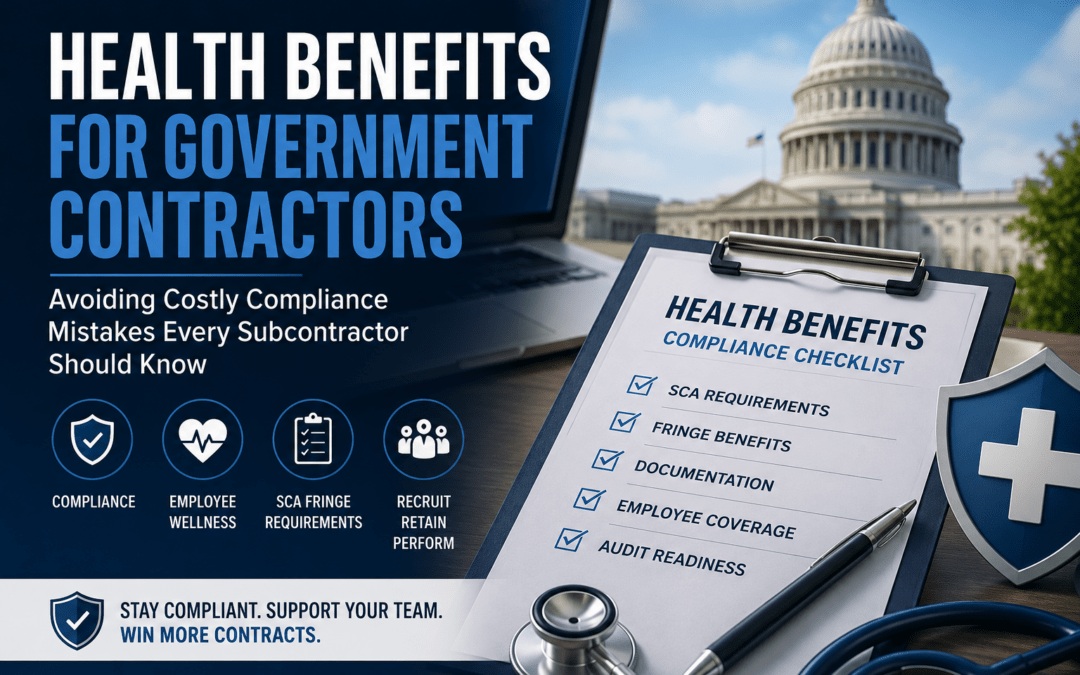
Health Benefits for Government Contractors: Avoiding Costly Compliance Mistakes Every Subcontractor Should Know

Health Benefits for Government Contractors: Avoiding Costly Compliance Mistakes Every Subcontractor Should Know

Table of Contents

Introduction to Health Benefits for Government Contractors

In today’s federal contracting environment, health benefits for government contractors are no longer just a standard HR offering—they are a compliance-driven, competitive necessity. For subcontractors working under prime federal contracts, especially those governed by labor standards such as the Service Contract Act (SCA) or Davis-Bacon Act, the way health benefits are structured, funded, documented, and administered can directly impact contract eligibility, profitability, and long-term sustainability.

Too often, subcontractors underestimate how deeply health benefits for government contractors are tied to federal compliance requirements. What appears to be a simple HR decision—choosing a medical plan, setting employer contributions, or offering supplemental coverage—can quickly become a legal and financial risk if it is not aligned with wage determinations, fringe benefit obligations, and audit expectations.

In 2026, enforcement scrutiny is increasing. Federal agencies and prime contractors are placing more responsibility on subcontractors to demonstrate compliance with fringe benefit requirements, accurate benefit valuation, and consistent employee coverage across classifications and job sites. At the same time, workforce shortages across technical, logistics, cybersecurity, and defense-related roles have made benefits strategy a critical differentiator in winning and retaining contracts.

This article explores how health benefits for government contractors influence contract success, where compliance risks commonly emerge, how they align with SCA fringe requirements, and how subcontractors can use benefits strategically to improve recruitment, retention, and performance. Most importantly, it outlines how to build a long-term compliance strategy that protects profitability while strengthening competitive positioning in the federal marketplace.


How Health Benefits for Government Contractors Influence Winning and Retaining Federal Contracts

The role of health benefits for government contractors extends far beyond employee satisfaction—it directly influences contract awards, renewals, and performance evaluations. Federal procurement officers and prime contractors increasingly evaluate subcontractors based on workforce stability, compliance readiness, and total compensation strategy, which includes health benefits.

When subcontractors bid on federal work, they are not only competing on price and capability. They are also competing on perceived reliability. A subcontractor that demonstrates strong, compliant, and sustainable health benefits for government contractors signals operational maturity. This becomes especially important in long-term service contracts where workforce continuity is critical to mission success.

Prime contractors are responsible for downstream compliance. As a result, they carefully evaluate subcontractors’ benefit structures to ensure alignment with federal requirements such as SCA wage determinations or agency-specific clauses. If a subcontractor’s health benefits structure appears inconsistent, underfunded, or poorly documented, primes may view them as a compliance risk—reducing the likelihood of award or continuation on a contract.

Additionally, many solicitations now include indirect evaluation criteria related to labor stability and employee retention strategies. Strong health benefits for government contractors programs help demonstrate that a subcontractor can maintain staffing levels without excessive turnover, which is a major risk factor in contract performance.

Retention is equally important after contract award. Subcontractors often operate in highly competitive labor markets where employees can easily transition between federal contractors. If health benefits are weak or inconsistently applied, turnover increases, leading to training costs, productivity loss, and potential contract penalties for failing to meet staffing requirements.

Another critical factor is pricing strategy. Health benefits directly influence labor burden rates and fringe calculations. Subcontractors who fail to accurately integrate health benefits for government contractors into their pricing models risk underbidding contracts and absorbing losses once benefit obligations are fully realized.

On the other hand, subcontractors that strategically design benefits packages aligned with contract requirements can achieve both competitiveness and profitability. For example, properly structured health benefits can be partially offset through compliant fringe allocation, helping stabilize labor costs while still offering attractive employee packages.

Ultimately, strong health benefits are not just a compliance necessity—they are a strategic advantage in winning and retaining federal contracts in an increasingly competitive procurement environment.


The Biggest Compliance Challenges Facing Health Benefits for Government Contractors Today

Despite their importance, managing health benefits for government contractors is one of the most complex compliance areas for subcontractors. The challenges stem from overlapping regulations, evolving labor rules, and the need to align HR systems with federal contract requirements.

One of the biggest challenges is benefit valuation. Under federal rules, especially the Service Contract Act, health benefits must be properly calculated as part of fringe obligations. Many subcontractors struggle to accurately determine the hourly value of benefits such as medical coverage, dental insurance, and supplemental health plans. Miscalculations can result in underpayment of fringe obligations, leading to back pay liability during audits.

Another major issue is inconsistent application across employee classifications. Subcontractors often manage multiple labor categories—full-time, part-time, exempt, non-exempt, and temporary staff. Ensuring that health benefits for government contractors are applied consistently and in accordance with contract terms is a frequent audit failure point.

Documentation is also a significant compliance risk. Federal auditors expect clear records showing how benefits are offered, calculated, and distributed. Without structured documentation systems, subcontractors may struggle to prove compliance even if benefits are technically correct. This is particularly problematic when working under multiple contracts with varying wage determinations.

A further challenge is coordination between payroll and benefits systems. Many compliance issues arise when payroll systems do not properly integrate health benefit deductions, employer contributions, or fringe credit allocations. This disconnect can result in inaccurate reporting and compliance discrepancies that surface during audits.

Subcontractors also face challenges related to benefit eligibility tracking. Employees moving between contracts or job sites may inadvertently fall out of eligibility or receive inconsistent coverage. This creates both compliance exposure and employee dissatisfaction.

Finally, regulatory interpretation itself is complex. Guidance around what qualifies as creditable fringe under SCA rules continues to evolve, and subcontractors must stay current on Department of Labor interpretations, wage determinations, and contract-specific clauses.

Without a structured compliance framework, health benefits for government contractors can quickly become a liability rather than an asset. Addressing these challenges requires proactive systems, not reactive fixes.


Aligning Health Benefits for Government Contractors with SCA Fringe Benefit Requirements

One of the most critical compliance areas for subcontractors is aligning health benefits for government contractors with the Service Contract Act (SCA) fringe benefit requirements. The SCA mandates that covered employees receive a minimum level of fringe compensation in addition to base wages, and health benefits are one of the most common methods of satisfying this obligation.

To achieve compliance, subcontractors must first understand that fringe benefits are not optional enhancements—they are required compensation components. Health insurance, medical reimbursements, and employer contributions to health plans can all be used to meet fringe obligations, but only when properly structured and documented.

A key requirement is that health benefits must be “bona fide” and consistently provided. This means health benefits for government contractors cannot be selectively applied or offered in a way that favors certain employees without justification. If benefits are not uniformly available to eligible employees under a covered contract, they may not be fully creditable toward fringe obligations.

Another important aspect is hourly valuation. Subcontractors must convert monthly or annual health benefit costs into an hourly equivalent to ensure they meet or exceed SCA fringe requirements. Errors in this calculation can result in underfunding fringe obligations, which may lead to wage restitution claims or contract penalties.

Additionally, subcontractors must ensure that health benefits are not double-counted. For example, if a portion of health insurance costs is already credited toward fringe requirements, it cannot be reused in another cost category. Proper accounting separation is essential to avoid compliance violations.

Documentation plays a central role in alignment. Subcontractors must maintain clear records showing how health benefits for government contractors are allocated across employees and contracts. This includes plan summaries, employer contribution records, payroll integration reports, and eligibility tracking documentation.

Coordination with prime contractors is also essential. Many primes require subcontractors to certify compliance with fringe requirements and may audit benefit structures periodically. Failure to align properly with SCA expectations can jeopardize subcontractor status on existing contracts.

Ultimately, aligning health benefits with SCA requirements is not just about compliance—it is about building a defensible, audit-ready system that supports long-term federal contracting success.


Using Health Benefits for Government Contractors to Strengthen Recruitment, Retention, and Performance

Beyond compliance, health benefits for government contractors serve as one of the most powerful tools for workforce management. In a competitive federal labor market, benefits often matter as much as salary when candidates choose between employers.

Recruitment is the first area where benefits have a direct impact. Skilled workers in cybersecurity, engineering, logistics, and defense support roles are frequently evaluating multiple offers simultaneously. Subcontractors offering strong health benefits for government contractors—including comprehensive medical coverage, low deductibles, and family options—gain a clear advantage in attracting qualified talent.

Retention is even more important. High turnover is one of the most costly issues in federal contracting environments. Every time an employee leaves, subcontractors incur replacement costs, training delays, and potential contract performance risks. Competitive health benefits reduce voluntary turnover by increasing employee satisfaction and perceived job security.

Health benefits also influence morale and productivity. Employees who feel supported through reliable healthcare coverage are more likely to remain engaged and focused on contract deliverables. This leads to improved performance metrics, fewer absenteeism issues, and stronger overall contract execution.

Another often-overlooked factor is brand reputation. Subcontractors known for strong health benefits for government contractors are more likely to be recommended by current and former employees. In industries where word-of-mouth and referrals play a significant role, this can significantly reduce hiring costs and improve candidate quality.

Additionally, benefits can be strategically used to stabilize staffing on long-term federal contracts. Instead of relying solely on wage increases—which can strain contract budgets—subcontractors can use structured benefits packages to create long-term value for employees while maintaining financial predictability.

Performance management is also indirectly impacted. Employees who are less stressed about healthcare access or financial strain are more likely to perform consistently and remain compliant with operational standards. This is especially important in high-security or mission-critical environments where reliability is essential.

In short, health benefits for government contractors are not just a compliance requirement—they are a strategic workforce investment that directly influences recruitment success, retention stability, and contract performance outcomes.


Creating a Long-Term Compliance Strategy for Health Benefits for Government Contractors in 2026

Developing a long-term strategy for health benefits for government contractors requires moving beyond reactive compliance and toward a structured, systems-based approach. In 2026, subcontractors must prepare for increased audit activity, tighter labor scrutiny, and more integrated compliance expectations from prime contractors.

The foundation of a strong strategy is centralized benefits governance. Subcontractors should implement a single system for managing eligibility, benefit valuation, payroll integration, and documentation. This ensures that health benefits for government contractors are consistently applied across all contracts and employee groups.

Next is audit readiness. Subcontractors should assume that every federal contract could be audited at any time. This means maintaining real-time documentation of benefit contributions, fringe allocations, and eligibility tracking. Waiting until an audit occurs is no longer a viable strategy in today’s federal environment.

Another key component is integration between HR, payroll, and contract management systems. When these systems operate independently, compliance gaps emerge. A long-term strategy ensures that health benefits for government contractors are automatically aligned with contract requirements, wage determinations, and billing structures.

Ongoing training is also essential. HR teams, payroll administrators, and contract managers must all understand how benefits interact with federal compliance rules. Without cross-functional understanding, even well-designed systems can fail in execution.

Strategic forecasting should also be included. Subcontractors must anticipate how benefit costs will change over time and how those changes will affect contract pricing and fringe obligations. This allows for proactive adjustments rather than reactive corrections.

Finally, subcontractors should establish periodic compliance reviews, ideally quarterly or biannually, to evaluate whether their health benefits for government contractors remain aligned with evolving regulations and contract requirements. These reviews should include both internal audits and external consulting support when necessary.

A long-term compliance strategy is not just about avoiding penalties—it is about creating operational stability, protecting margins, and positioning the subcontractor as a trusted federal partner.


Conclusion

In the federal contracting ecosystem, health benefits for government contractors are far more than an HR function—they are a critical compliance requirement, a workforce strategy, and a competitive advantage. Subcontractors who fail to properly structure, document, and integrate their benefits programs expose themselves to financial risk, audit findings, and contract instability.

However, those who take a proactive approach—aligning benefits with SCA requirements, integrating systems, and using benefits strategically for recruitment and retention—position themselves for long-term success in the federal marketplace.

As 2026 brings increased scrutiny and higher expectations, subcontractors must treat health benefits for government contractors as a core part of their compliance infrastructure. Done correctly, they not only protect contracts but also strengthen the workforce and improve overall performance across every engagement.

Successor Employer Obligations and Union Contracts: A Compliance Guide for Subcontractors in 2026

Successor Employer Obligations and Union Contracts: A Compliance Guide for Subcontractors in 2026

Table of Contents

Introduction to Successor Employer Successor

In today’s federal contracting environment, successor employer obligations have become one of the most critical compliance challenges facing subcontractors working in unionized settings. As government contracts change hands through renewals, recompetes, mergers, or subcontract transitions, the question of who inherits labor responsibilities is no longer theoretical—it is a legal and operational reality with significant financial and reputational consequences.

For subcontractors, misunderstanding successor employer obligations can lead to unintended violations of the National Labor Relations Act (NLRA), disputes with unions, wage and benefit liabilities, and even disqualification from future government opportunities. In 2026, enforcement scrutiny continues to increase as agencies and unions focus more heavily on workforce continuity, fair labor practices, and contract stability.

This guide breaks down the essential components of successor obligations in union contracts, explains how liability is triggered, explores hidden risks for subcontractors, and provides practical strategies for compliance. Each section is designed to help contractors and HR leaders understand not just the legal framework, but also the real-world implications of managing workforce transitions in federal contracting environments.


1. Understanding Successor Employer Obligations in Unionized Government Contract Work

Successor employer obligations refer to the legal duties a new employer may inherit when taking over a business, contract, or portion of a workforce that was previously covered by a union agreement. In unionized government contract work, these obligations are especially important because workforce continuity is often protected under federal labor law principles and collective bargaining agreements.

For subcontractors, successor obligations typically arise when a contract changes hands but the operational workforce remains largely the same. In these situations, the law may treat the incoming subcontractor as a “successor employer,” meaning they must recognize and engage with the existing union under certain conditions. This does not automatically mean the new employer must adopt every term of the prior collective bargaining agreement; however, it often creates a duty to bargain and maintain certain employment conditions.

In federal contracting environments, particularly those governed by Service Contract Act (SCA) principles and unionized labor agreements, successor employer obligations can include maintaining wage structures, honoring accrued benefits, and recognizing union representation until a lawful bargaining process occurs. The key legal concept is continuity of workforce rather than ownership of the contract itself.

Subcontractors often underestimate how easily successor status can be triggered. Even small operational changes, such as retaining a majority of the predecessor’s workforce or continuing similar job functions under a new contract, may establish successor employer obligations. Courts and the National Labor Relations Board (NLRB) generally focus on whether there is “substantial continuity” in the business operations and workforce.

For government subcontractors, this means due diligence is not optional—it is essential. Before accepting a contract transition, organizations must evaluate labor history, union presence, existing collective bargaining agreements, and workforce composition. Failure to do so can result in immediate legal exposure once operations begin.

Ultimately, understanding successor employer obligations is about recognizing that in unionized government contracting, you are not just inheriting work—you may also be inheriting labor relationships, legal duties, and long-standing employee expectations that must be managed carefully from day one.


2. Legal Triggers That Activate Successor Employer Obligations in Contract Takeovers

The activation of successor employer obligations is not random—it is driven by specific legal and operational triggers that determine whether a new subcontractor inherits union-related responsibilities. In federal contracting environments, these triggers are closely tied to labor law principles developed under the NLRA and interpreted through case law.

One of the most important triggers is substantial continuity of workforce. If a subcontractor retains a majority of employees from the predecessor contract, the NLRB may determine that successor obligations apply. This includes situations where job titles, duties, and work locations remain largely unchanged, even if the contracting entity has changed.

Another key trigger is continuity of business operations. If the incoming subcontractor performs the same core services for the same government client using similar methods, equipment, and supervision structures, this operational consistency strengthens the case for successor employer obligations. Courts often focus less on corporate identity and more on practical workplace continuity.

A third trigger involves timing of workforce transition decisions. If a subcontractor begins hiring or onboarding employees before formally breaking ties with the predecessor workforce, they may inadvertently signal acceptance of successor obligations. Even recruitment practices can influence legal interpretation, particularly when hiring is done en masse from the prior employer’s staff.

Union presence is also a major factor. When a recognized union already represents the workforce, successor obligations are more likely to attach, especially if the union requests bargaining rights shortly after transition. In these cases, subcontractors may be required to recognize the union and engage in good-faith bargaining even if they did not sign the original collective bargaining agreement.

Government contracts themselves can also indirectly trigger successor obligations. Many federal agreements include labor continuity requirements or references to prevailing labor standards that reinforce workforce stability. While these provisions do not independently create NLRA obligations, they can strengthen the expectation that employment conditions will remain consistent during transition.

The challenge for subcontractors is that these triggers often overlap. A contract transition involving retained employees, unchanged job functions, and an active union environment almost guarantees scrutiny. Once successor employer obligations are established, failure to comply can lead to unfair labor practice charges, contract disputes, and reputational damage with federal agencies.

Understanding these triggers is essential for proactive compliance. Subcontractors must evaluate not only what they are inheriting operationally, but also how those operational decisions intersect with labor law standards that define successor employer obligations.


3. The Hidden Risks of Successor Employer Obligations for Subcontractors in 2026

While successor employer obligations are often discussed in legal terms, the real-world risks for subcontractors in 2026 extend far beyond compliance theory. These obligations can significantly affect profitability, workforce stability, and long-term eligibility for government work.

One of the most immediate risks is unanticipated labor cost escalation. When successor obligations apply, subcontractors may be required to maintain existing wage scales or benefit structures during bargaining periods. This can eliminate planned cost savings that were built into contract bids, directly impacting margins and project profitability.

Another hidden risk involves union bargaining exposure. Even if a subcontractor did not negotiate the original collective bargaining agreement, they may still be required to bargain with the union in good faith. This process can be time-consuming, legally complex, and operationally disruptive, particularly for organizations without prior labor relations experience.

There is also a significant litigation and enforcement risk. Missteps in handling successor employer obligations can lead to unfair labor practice charges before the NLRB. These proceedings can result in reinstatement orders, back pay liability, or mandatory bargaining requirements that were not anticipated during contract acquisition.

Reputation risk is equally important in the federal contracting space. Agencies closely monitor labor compliance history, and subcontractors involved in labor disputes may face reduced competitiveness in future bid evaluations. In highly regulated industries, even perceived labor instability can influence procurement decisions.

Operational disruption is another often-overlooked consequence. Successor obligations can create uncertainty among employees, especially during transitions. If workforce expectations are not properly managed, subcontractors may face morale issues, turnover spikes, or productivity declines at the exact moment operational stability is most needed.

In 2026, these risks are amplified by increased scrutiny of labor practices in government contracting. Agencies are placing greater emphasis on workforce continuity, fair wages, and union engagement. This means subcontractors must treat successor employer obligations not as a secondary legal issue, but as a core operational risk factor.

Ultimately, the hidden danger lies in underestimating how quickly successor obligations can reshape a contract’s financial and legal landscape. What appears to be a straightforward contract transition can evolve into a complex labor compliance challenge if not properly assessed from the outset.


4. How Union Agreements Shape Successor Employer Obligations and Workforce Continuity

Union agreements play a central role in defining and shaping successor employer obligations, particularly in government subcontracting environments where collective bargaining agreements govern wages, benefits, and working conditions.

When a subcontractor inherits a unionized workforce, the existing collective bargaining agreement (CBA) often serves as the foundation for labor relations during the transition period. Even if the subcontractor is not a party to the original agreement, the principles of successor employer obligations may require them to maintain certain terms until a new agreement is negotiated.

One of the most important aspects of union agreements is their role in ensuring workforce continuity. Unions typically prioritize job security, consistent compensation structures, and preservation of seniority rights. As a result, successor employer obligations often require maintaining these elements to avoid disruption and labor disputes.

CBAs also influence the scope of bargaining obligations. If a union is already recognized at the predecessor organization, the incoming subcontractor may be required to engage in bargaining before making significant changes to wages, benefits, or working conditions. This ensures that employees are not subject to unilateral changes during contract transitions.

In many cases, union agreements include clauses that anticipate ownership or contractor changes. These “successor clauses” are designed to ensure continuity of labor protections even when the employer changes. Such provisions can significantly strengthen the legal basis for successor employer obligations.

For subcontractors, understanding these agreements is critical because they define the operational baseline for the workforce. Misinterpreting or ignoring CBA provisions can result in disputes that escalate quickly into formal labor complaints or contract performance issues.

Union agreements also influence employee expectations. Workers covered under CBAs often assume continuity in employment terms regardless of employer changes. When successor obligations are not properly communicated or managed, misunderstandings can lead to grievances, work stoppages, or morale issues.

In essence, union agreements act as both a legal framework and a cultural contract between labor and management. They shape how successor employer obligations are applied and how smoothly workforce transitions occur in federal subcontracting environments.


5. Reducing Liability Through Proper Management of Successor Employer Obligations

Effectively managing successor employer obligations requires a proactive, structured approach that integrates legal compliance, HR strategy, and operational planning. For subcontractors in federal contracting, reducing liability begins long before a contract transition occurs.

The first step is conducting comprehensive labor due diligence. This includes reviewing existing collective bargaining agreements, identifying union representation status, analyzing workforce composition, and assessing historical labor disputes. Understanding the labor environment is essential to predicting whether successor obligations will apply.

Next, subcontractors should implement transition planning protocols that align HR, legal, and operations teams. These protocols should define how employees are onboarded, how communications are handled, and how bargaining obligations will be addressed if required. Early alignment reduces the risk of compliance gaps during transition.

Another critical strategy is maintaining clear documentation and communication practices. Successor employer obligations often hinge on operational behavior, so documenting hiring decisions, job continuity, and supervisory structures can be important in demonstrating compliance intent.

Training leadership teams on labor law fundamentals is also essential. Many compliance failures occur not at the executive level, but during day-to-day operational decisions made without understanding successor obligations. Educated managers are less likely to make decisions that unintentionally trigger legal exposure.

Subcontractors should also develop a bargaining readiness plan. If union obligations are triggered, being prepared to engage constructively with union representatives can significantly reduce conflict and legal escalation. This includes understanding bargaining timelines, negotiation strategies, and compliance boundaries.

Finally, ongoing monitoring of labor law developments is essential. In 2026, successor employer obligations continue to evolve through regulatory interpretation and case law. Staying informed allows subcontractors to adjust policies before issues arise.

By treating successor employer obligations as a strategic compliance function rather than a reactive legal issue, subcontractors can significantly reduce risk while maintaining operational stability in government contracting environments.


Conclusion

Successor employer obligations are a defining factor in unionized government subcontracting, shaping everything from workforce continuity to legal compliance and financial performance. As contract transitions become more complex in 2026, subcontractors must recognize that labor obligations often transfer alongside operational responsibility.

By understanding how successor status is determined, identifying legal triggers, acknowledging hidden risks, and proactively managing union relationships, organizations can navigate transitions with confidence and reduce exposure to costly disputes.


At Cornerstone SCA, we specialize in Successor Employer Obligations. Contact Cornerstone SCA at 405-706-3818 to learn more!

Why Government Contractors Are Turning to Employee Benefits Consulting Through Fractional Benefits Leadership in 2026

Why Government Contractors Are Turning to Employee Benefits Consulting Through Fractional Benefits Leadership in 2026

Table of Contents

Introduction to Employee Benefits Consulting and Fractional Benefits Leadership

Government contractors operate in one of the most regulated and compliance-driven employment environments in the United States. As labor requirements, service contracts, and federal oversight continue to evolve, many organizations are discovering that traditional internal HR and benefits management models are no longer sufficient. Instead, a growing number of contractors are turning to employee benefits consulting supported by fractional benefits leadership to gain strategic oversight, reduce compliance risk, and improve workforce competitiveness.

This approach blends high-level executive benefits expertise with flexible, on-demand support. Rather than hiring a full-time benefits executive, contractors are engaging fractional leaders who specialize in employee benefits consulting, ensuring that organizations remain compliant, cost-effective, and competitive in attracting and retaining talent.

The Growing Demand for Employee Benefits Consulting Among Government Contractors

Government contractors are increasingly recognizing the strategic importance of employee benefits consulting. This demand is being driven by multiple factors including rising healthcare costs, stricter compliance regulations under frameworks such as the Service Contract Act (SCA), the Affordable Care Act (ACA), and ERISA requirements, as well as growing competition for skilled labor. Organizations that once treated benefits administration as a purely operational function are now realizing it is a core component of workforce strategy and contract performance.

Employee benefits consulting provides contractors with access to specialized expertise that goes beyond routine HR administration. Instead of simply managing enrollments or vendor paperwork, consultants evaluate plan design, benchmark benefits against industry standards, and ensure compliance with federal and state regulations. This shift has made employee benefits consulting a critical resource for companies managing multiple contracts, locations, and employee classifications.

In addition, government contractors are under pressure to demonstrate cost efficiency and audit readiness. Benefits errors can lead to contract penalties, lost bids, or reputational damage. By leveraging employee benefits consulting, organizations gain a proactive approach to managing benefits risk while improving transparency and reporting accuracy.

The competitive labor market has also contributed to this growing demand. Contractors must offer attractive and compliant benefits packages to recruit and retain skilled workers, particularly in industries such as defense, IT services, engineering, and logistics. As a result, employee benefits consulting has shifted from a luxury service to an operational necessity for many organizations.

How Fractional Benefits Leadership Is Transforming Employee Benefits Consulting

Fractional benefits leadership is redefining how organizations access employee benefits consulting. Instead of relying on full-time executives or overstretched HR teams, government contractors are engaging fractional leaders who provide executive-level oversight on a part-time or project basis. This model allows organizations to tap into deep expertise without the financial burden of a permanent senior hire.

These fractional leaders function as embedded advisors, guiding benefits strategy, vendor negotiations, compliance alignment, and plan optimization. They bring years of experience in employee benefits consulting and apply that knowledge directly to the contractor’s workforce structure. This includes analyzing benefit utilization trends, identifying cost inefficiencies, and ensuring alignment with federal contracting requirements.

One of the most significant transformations is the shift from reactive to proactive benefits management. Traditional HR teams often respond to issues after they arise, such as compliance gaps or rising healthcare costs. Fractional benefits leaders, however, anticipate challenges and implement preventative strategies. This elevates the role of employee benefits consulting from administrative support to strategic leadership.

Additionally, fractional leadership enables scalability. As government contractors grow or win new bids, their benefits complexity increases. Fractional experts can scale involvement up or down depending on contract load, workforce expansion, or regulatory changes. This flexibility ensures continuous access to employee benefits consulting expertise without unnecessary overhead.

Ultimately, this model is transforming how organizations perceive and utilize employee benefits consulting, shifting it into a dynamic, embedded component of business strategy.

Reducing Compliance Risks Through Employee Benefits Consulting and Strategic Benefits Oversight

Compliance is one of the most critical challenges faced by government contractors. Regulations such as the Service Contract Act (SCA), ERISA, ACA reporting requirements, and Department of Labor audits require precise and consistent benefits administration. Even minor errors can result in financial penalties or contract disruptions, making employee benefits consulting an essential safeguard.

Employee benefits consulting provides structured oversight to ensure that benefits programs remain compliant at all times. Consultants review eligibility classifications, contribution structures, plan documentation, and reporting processes to ensure alignment with federal requirements. This reduces the risk of audit findings and strengthens the organization’s ability to withstand regulatory scrutiny.

Fractional benefits leadership enhances this process by embedding compliance expertise directly into the organization’s decision-making structure. Instead of relying on external reviews after issues occur, contractors gain ongoing monitoring and advisory support. This continuous oversight model is particularly valuable in multi-state or multi-contract environments where compliance complexity increases significantly.

In addition, employee benefits consulting supports documentation and audit readiness. Contractors must maintain accurate records of benefit offerings, employee classifications, and fringe benefit calculations. Consultants help standardize these processes, ensuring that data is accessible and defensible during audits or contract reviews.

By integrating employee benefits consulting with fractional leadership, government contractors can significantly reduce exposure to compliance risks while improving operational confidence and regulatory preparedness.

Why Employee Benefits Consulting Helps Government Contractors Control Costs and Improve Efficiency

Rising healthcare and benefits costs continue to place pressure on government contractors, many of whom operate under fixed-price or tightly budgeted contracts. In this environment, employee benefits consulting plays a critical role in controlling expenses while maintaining competitive benefit offerings.

Consultants analyze plan structures, vendor contracts, and utilization patterns to identify inefficiencies and opportunities for savings. This includes evaluating insurance carriers, negotiating renewal rates, and optimizing employer contributions. Through strategic oversight, employee benefits consulting helps organizations reduce waste and improve financial predictability.

Fractional benefits leadership further enhances cost control by ensuring that decisions are guided by executive-level insight rather than reactive budgeting. Instead of responding to cost increases after they occur, contractors can implement long-term strategies that stabilize expenses. This includes wellness initiatives, plan redesign, and improved employee education to reduce unnecessary claims.

Efficiency gains are also realized through process improvement. Many government contractors rely on outdated or fragmented benefits administration systems. Employee benefits consulting introduces streamlined workflows, automated reporting tools, and centralized data management practices. This reduces administrative burden and frees HR teams to focus on strategic initiatives.

Ultimately, employee benefits consulting enables contractors to align workforce investment with financial performance, ensuring that benefits programs remain sustainable and competitive in a demanding federal contracting environment.

Building a Competitive Workforce with Employee Benefits Consulting and Fractional Benefits Leadership

In today’s competitive labor market, government contractors must go beyond salary offers to attract and retain top talent. Employee benefits consulting plays a key role in designing benefits packages that meet employee expectations while aligning with organizational goals.

Consultants help contractors benchmark their benefits against industry standards, ensuring that offerings remain competitive in sectors such as defense, IT, engineering, and logistics. This includes health insurance, retirement plans, paid leave policies, and supplemental benefits that influence employee satisfaction and retention.

Fractional benefits leadership adds a strategic layer to this process by aligning benefits programs with long-term workforce planning. Rather than treating benefits as a static offering, organizations can evolve their packages based on contract needs, employee demographics, and market trends.

Employee benefits consulting also enhances recruitment outcomes. A well-structured benefits strategy can significantly improve job acceptance rates and reduce turnover, particularly in high-skill roles. For government contractors competing for cleared personnel or specialized technical talent, this advantage is especially critical.

By combining employee benefits consulting with fractional leadership, contractors can build a workforce strategy that supports both compliance and competitive positioning in the federal marketplace.

Conclusion

Government contractors are increasingly recognizing that employee benefits are no longer just an administrative responsibility—they are a strategic asset. By leveraging employee benefits consulting supported by fractional benefits leadership, organizations can improve compliance, reduce costs, and strengthen workforce competitiveness. This integrated approach allows contractors to remain agile in a complex regulatory environment while positioning themselves for long-term success in federal contracting.

To learn more about Employee Benefits Consulting, contact Cornerstone SCA at 405-706-3818 for a free no obligation assessment.